Category Reputation Management

Who Needs ORM (Online Reputation Management)

Anyone whose web site appears in response to an online search might need ORM. Consumer generated media offers the public an opportunity to express their views. This information can be found in search engine results. The more a product, brand or company is exposed to public attention and scrutiny, the greater the likelihood that someone will want to challenge their reputation. This can include dissatisfied clients, customers and competitors, who may have legitimate complaints, but can also include rumor mongers, and irresponsible, vindictive web site wizards, whose sole purpose is to challenge another website’s integrity.

Consider the search results for the following “name brand” web sites:

* Walmart – 2 of the first 10 Google listings is negative:

Wal-mart watch – “to reveal the harmful impact of Wal-mart”…
Wal-mart: “the high cost of low prices”…

* McDonalds – 1 of the first 10 Google listings is negative;

“McDonalds exploitation of animals, people and the environment”…

* Coca Cola – 1 of the first 10 listings is negative;

Killer Coke -“Alleged paramilitary death squads to murder”…

The problem is universal. Thousands of companies like these can have the effect of their web sites neutralized by stories appearing on the search engines. And its not limited to companies. People of high profile are convenient targets; celebrities, high-power business people, government as well as individuals from all walks of life, regardless of gender, national background and social status are being victimized and insulted. If you have a company, a brand name or product, which someone could or did find fault with; or if you have ever been written about in the media in a less than flattering vein, or if you monitor your Google listing and a negative listing appears, you must realize that the negative story will not disappear on its own.

Negative reviews are there to stay and may even multiply until you retain the services of a professional online reputation management professional. Reputation management is vitally important for all organizations. Both on a personal and corporate level, everyone should be concerned about their online image. On a personal level, having a damaged reputation can result in not being eligible for employment. For businesses a bad reputation can mean tremendous financial loss. As a result of a tarnished reputation, businesses have lost millions, have replaced trusted CEO’s, and have even ceased operating within months of negative publicity.
Has Bing Stopped Honoring Court Orders to Remove Defamatory Content?

Our CEO Pierre Zarokian has written a new article about Bing’s alleged change of heart on removing court-ordered defamatory content from its search engine. Has Bing truly changed its policy?

If your online reputation has been tainted, you know how devastating it can be to have defamatory content about you or your company featured on the web for everyone to see. Major search engines such as Google and Yahoo are usually fair about the issue. If they receive an order from the court to remove defamatory content, they usually comply by removing it from their search indexes. And up until recently that was also the case with Bing. However, leading attorney who specialize in internet defamation law are claiming that Bing has changed its policy and no longer honors court orders.

Published in SearchEngineWatch.com, the article features interviews with leading reputation management attorneys, a spokesperson from Bing, and final words on the matter by reputation management guru Pierre Zarokian. Read the full article here.

TheDirty loses Reputation Management Lawsuit

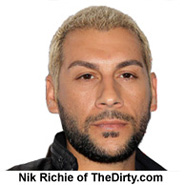
TheDirty has lost a lawsuit against Sarah Jones who claimed damaging posts were posted on thedirty.com about her that destroyed her reputation. This is a major victory for the reputation management industry as the judge has allowed the case to go through, while thedirty had claimed immunity due to the Communication Decency Act (CDA) which protects public forums from any liability when 3rd party content is posted.  Due to the owner Nik Richie making edits to posts, the judge did not accept the CDA as a defense.  Sarah Jones had previously admitted to having sex with a minor and got 5 years probation. However, the specific damaging post on The  Dirty was prior to that incident and stated that Sarah Jones as a cheerleader for the Bangles had sex with every member of a football team. The jury awarded $388K to Sarah Jones, but collection might be a problem as Nik has stated that he is $1 million in debt and that he would never pay a penny to Jones.  The Dirty plans to appeal the case.

Our CEO Pierre Zarokian has published two articles on Search Engine Watch and Examiner about this subject:


RipOff Report Verified provides inusrance policy against negative feedback

RipOff Report is now offering for $89 per month a ongoing service of giving businesses 14 days to resolve complaints before a negative review is posted. Experts say that it may help boost rankings in Google and Bing.

Ripoff Report creates millions of dollars every year by charging implicated companies a flat cost based upon the number of problems have actually been made against them. Business are charged anywhere from $5,500 to even more than $100,000 to have their reports removed, however they only receive inspections rather than removal as advertised to them. If grievances have been dealt with according to the inspection, the website will permit a brand-new heading to be published above the initial post. However the initial complaint will never be eliminated touts owner Ed Magedson, proudly.

The questionable aspect of Ripoff report is that it does not right incorrect details without charge. Some implicate this to be extortion, however after numerous legal procedures, judicial bodies have stated that although they disapprove of the company practices that Magedson uses, because the postings are made by third parties, it can’t be labeled extortion.

Health Inspectors May Use Yelp as a New Tool

Ever since L.A. County began to require public publishing of restaurant grades, the playing field has been incredibly leveled. A-rated restaurants as well as those with C’s had to bear all to public scrutiny, affecting business practices in the food industry greatly. Studies by Stanford and the University of Maryland calculated that customers rewarded eateries with 5% more revenue after the shift in practice, and those who failed to deliver a healthy environment dropped earnings by more than 20%. This kind of immediate response to consumer demand is what pushed New York City to do the same thing in 2010, although studies didn’t produce the same results.

Experts say that online reviews including Google and Yelp allow us to make informed choices before we eat at a restaurant. We no longer rely on health inspectors for information when quick access to fellow impartial foodies is all we need to determine where we want to eat. We can now easily hop on the internet and decide within a few seconds whether or not we want to eat at a particular place. We know that other customers are going to be honest about their experiences so we can trust them.

Other counties are starting to follow suit, as San Francisco has been publishing health inspections online since 2007. Apps like ABCEats in New York City make information instantly public. But government organizations are already using bad reviews to actually find unsanitary conditions before even entering the facility, giving restaurants less time to prepare for inspection. While researchers are developing algorithms to find subtle hints of fake reviews, reputation management may be needed for those who have been wrongly attacked.

If you have bad reviews on Yelp and need help with Yelp Review Removals or increasing your positive reviews, please visit our Yelp Review Removal page.

New Scam Reporting Sites to Lookout for

Below are a list of smaller scam reporting sites that may be up and coming to lookout for. If you are an individual that has been scammed, these are good resources for you, but if you run a business, you need to watch out for any negative reports on these sites that may hurt your reputation.

www.scamvent.com
www.fraud.org
www.hotcomplaints.com
www.hotscams.com
www.consumerreports.org
www.reportascam.net
www.my3cents.com
www.consumerist.com
www.scamwarners.com

Major Scam Reporting Sites

If you are an individual or business that has been scammed, there are plenty of sites that you can report fraudulent businesses. On the other hand if you are a business, you must watch out for negative reports on these sites.

We provide you a list of some of these major sites below. If you click on the links you will also find more information on how these sites operate and what we can do to help you remove reviews from these scam reporting sites.

Ripoff Report
Pissed Consumer
Scam.com
ScamBook
Complaints.com
Complaints Board

In addition, there are plenty of local directories such as Yelp, YellowPages.com, Merchant Circle, and Google+ Local that you can use to post business reviews, but these would only work if you can find the business listed on them.

Most often, you can leave anonymous reviews on these sites and the only thing required may be a valid email address. This unfortunately makes it hard for business to track down the actual posters. In our opinion, it is not a good or ethical practice to leave anonymous reviews. If you were really screwed by a business, then use at least your real first name and last name’s initial so there is a way for the business owner to know who you are and try to reach out to you to offer you a resolution or refund.


Reputation Stars